Commission Councillor Siegmund (Schmul) Bernhard
Manufacturer and head of the community
- Entrepreneur
- Director
- Community head
Biography
Siegmund (Schmul) Bernhard was born on 19 March 1846 in Dargun as the son of the Dargun merchant Behr Isaac Bernhard and Therese Reitze née Behrens, his second wife. He had a half-sister as well as another sister and a brother. He received his schooling in Dargun. By 1867 at the latest he was working as a merchant's apprentice in the textile goods shop of Heymann Heinssen in Goldberg and also lived there at that time. After returning to his home town he joined as co-owner the brush and brush-wood factory B. I. Bernhard (in the old spelling "B. J. Bernhard"), which his father had founded in Dargun on 17 October 1838. The original name of the factory was always retained later. Like his father, Bernhard was for a time head of the Jewish community of Dargun.
On 16 June 1880 he married in Waren Helene Löwenberg, nine years his junior, daughter of the long-established Jewish merchant Seelig Löwenberg from Waren. Their three sons were all born in Dargun: Paul in 1883, Otto in 1884 and Arnold in 1886.
After his father's death in 1888, Bernhard took over the brush factory as sole owner. As early as 1889 he acted as a substitute for the elected member of the Israelite Supreme Council, and later became a member himself. He later decided to move his business and the residence of his family to the economically prospering Rostock, where they finally settled in May 1890. Schnickmannstraße 9 in Rostock was the center of their lives, both private and professional. The brush factory proper was operated here. A further factory for brush wood was later located on the Warnowufer. In 1900 Bernhard was elected head of the Israelite community of Rostock and guided its fortunes until 1923, when Max Samuel took over this office from him.
The business of the brush factory went well. For the opening of the synagogue of Rostock in 1902, he was thus able to donate various furnishings from his private fortune. Probably in the 1920s Bernhard passed the management of the firm to his son Arnold.
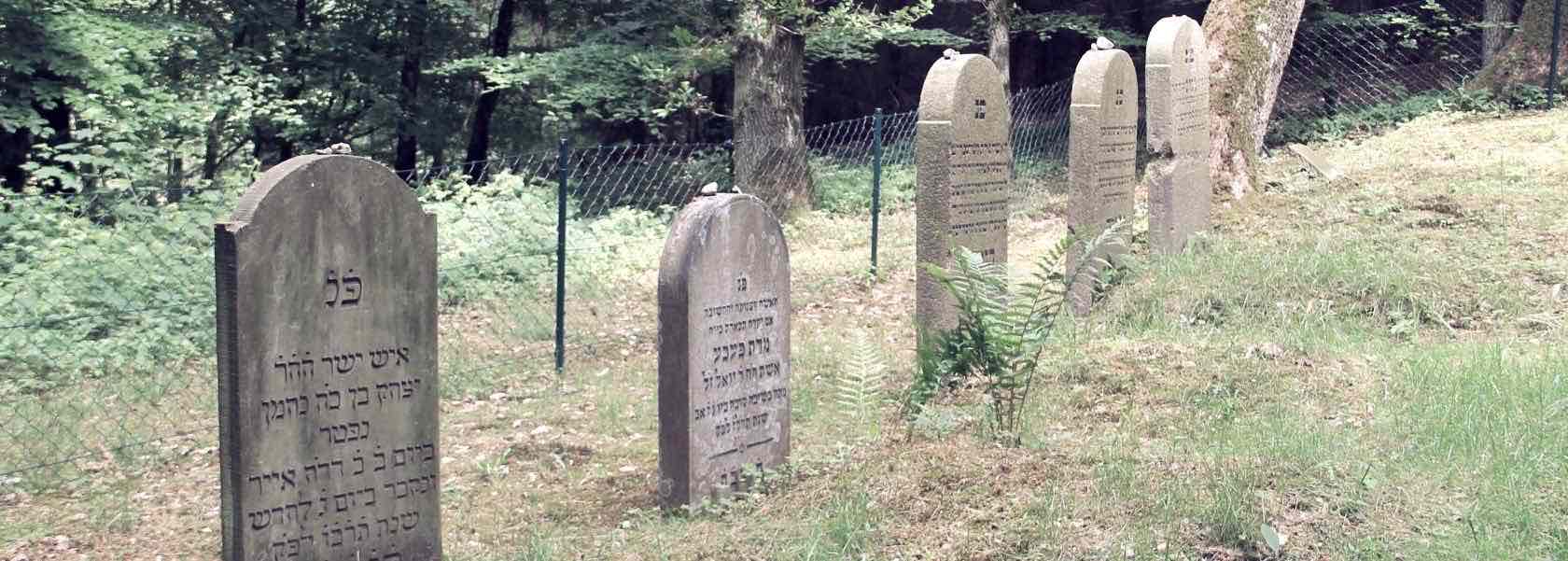
Siegmund Bernhard died on 13 May 1934 in Rostock and was buried in the Jewish cemetery Rostock-Lindenpark. His gravestone is still there today. His wife Helene survived him, but during the Nazi era she was deported to Theresienstadt and starved to death there on 6 June 1944. Their son Arnold Bernhard also became a victim of the Nazi racial delusion. Their son Paul, by contrast, managed to flee to Chile in time.